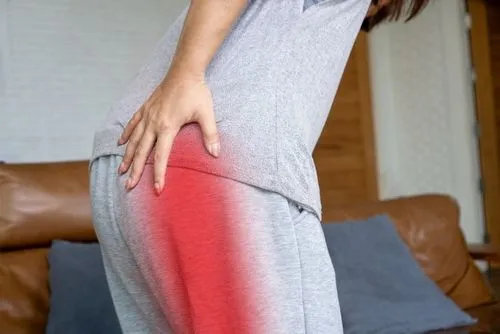
At The Russell Center for Chiropractic & Sports Medicine in Beverly, MA, our chiropractor regularly assists patients in understanding and managing sciatica, a condition that causes significant discomfort along the path of the sciatic nerve. Sciatica typically originates from irritation or compression of the nerve roots in the lower spine and manifests as pain that travels from the lower back through the buttock and down one leg. Many individuals first notice this issue after prolonged sitting, lifting, or sudden movements that aggravate an existing spinal problem.
What Causes Sciatica?
The primary cause of sciatica involves a herniated disc in the lumbar spine that protrudes and presses on the sciatic nerve roots. Spinal stenosis narrows the spinal canal or nerve exit points, creating compression that leads to radiating symptoms, particularly in older adults. Piriformis syndrome develops when the piriformis muscle in the buttock tightens or spasms and irritates the sciatic nerve as it passes nearby. Degenerative changes such as bone spurs or spondylolisthesis alter spinal alignment and contribute to nerve involvement over time. Accurate identification of the underlying mechanism guides effective sciatica treatment decisions.
Recognizing Key Symptoms
Sciatica commonly produces sharp, shooting, or burning pain that starts in the lower back or buttock and extends down the back of the thigh, sometimes reaching the calf or foot. Numbness, tingling, or muscle weakness often accompanies the pain in the affected leg or foot. Symptoms usually affect only one side of the body and may intensify with coughing, sneezing, or prolonged sitting. Standing or walking sometimes relieves discomfort temporarily while bending forward or sitting aggravates it. These characteristic patterns help distinguish sciatica from general back pain or muscle strain.
Conservative Management Approaches
Initial sciatica treatment focuses on reducing inflammation and relieving nerve pressure through rest, ice application, and gentle movement when tolerated. Chiropractic adjustments target spinal restrictions to improve joint mobility and decrease nerve irritation in the lumbar region. Soft tissue therapy releases tight muscles such as the piriformis or gluteals that contribute to compression. Therapeutic exercises strengthen core stability and promote proper posture to support long-term nerve health. Many patients experience gradual improvement with this non-invasive combination.
Lifestyle Adjustments for Prevention
Maintaining proper lifting techniques and avoiding prolonged sitting helps prevent sciatica episodes from recurring. Ergonomic workstations with lumbar support and frequent position changes reduce spinal stress during daily routines. Regular low-impact activity such as walking or swimming strengthens supporting muscles without overloading the lower back. Weight management decreases pressure on spinal structures and discs. These habits complement professional care and contribute to sustained relief.
Seeking Sciatica Treatment in Beverly
The Russell Center for Chiropractic & Sports Medicine offers targeted sciatica treatment near you in Beverly, MA. A chiropractor near you can conduct a detailed assessment and develop a personalized plan to address your symptoms effectively. Contact The Russell Center for Chiropractic & Sports Medicine today to schedule an appointment and begin managing sciatica with confidence.